- The App Widget’s onTap Action has been left unassigned for the users to set the particular action they want. Participation Send your suggestions to this Email-Id E-mail:- simplework.elegant@gmail.com Instructions Change the onTap Function of the Apps and App drawers. Tap on the particular widget and select onTap Widget Action option.
- Notice that it is nil when app is displaying its primary icon. SetAlternateIconName is a function to set up icon to be displayed. If we set the icon name to nil, the app will display its primary icon.
How Ask to Buy works
Select the “App Drawer icon” to get it back on your Home screen. If you don’t see a plus sign, long-press the Lower Dock and tap default icon. You should be able to find and select the app drawer option from here. Once you have access to your app drawer, it will be easier to recover any deleted or hidden Android app icons.
With Ask to Buy, when kids want to buy or download a new item, they send a request to the family organizer. The family organizer can use their own device to approve or decline the request. For example, if a child wants to buy an app, the family approver can see the app and decide whether to allow it.
If the family organizer approves the request and completes the purchase, the item automatically downloads to the child's device. If the family organizer declines the request, no purchase or download will take place. If a child redownloads a purchase, downloads a shared purchase, installs an update, or uses a redemption code, the family organizer won’t receive a request.
Who can use Ask to Buy
Familes can use Ask to Buy after they set up Family Sharing. The family organizer can turn on Ask to Buy for any family member who isn't an adult. It's on by default for any children under 13. You'll be asked to set up Ask to Buy when you invite anyone under 18 to your family group.1
If a family member turns 18 and the family organizer turns off Ask to Buy, the family organizer can't turn it on again.
How to turn on or turn off Ask to Buy
If you're the family organizer, use your own device to turn on or turn off Ask to Buy.
On your iPhone, iPad, or iPod touch
- Open the Settings app.
- Tap your name.
- Tap Family Sharing.
- Tap Ask to Buy.
- Tap your family member's name.
- Use the toggle to turn on or turn off Ask to Buy.
On your Mac
- Choose Apple menu > System Preferences, then click Family Sharing.
- Click Family in the sidebar.
- Click Details next to the child's name on the right.
- Select Ask to Buy.
On your Mac with macOS Mojave or earlier
- Choose Apple menu > System Preferences.
- Then click iCloud.
- Click Manage Family and select your family member's name.
- Select Ask to Buy.
How to approve or decline a request
If you're the family organizer, use your iPhone, iPad, iPod touch, Apple Watch, or Mac to approve or decline a request.

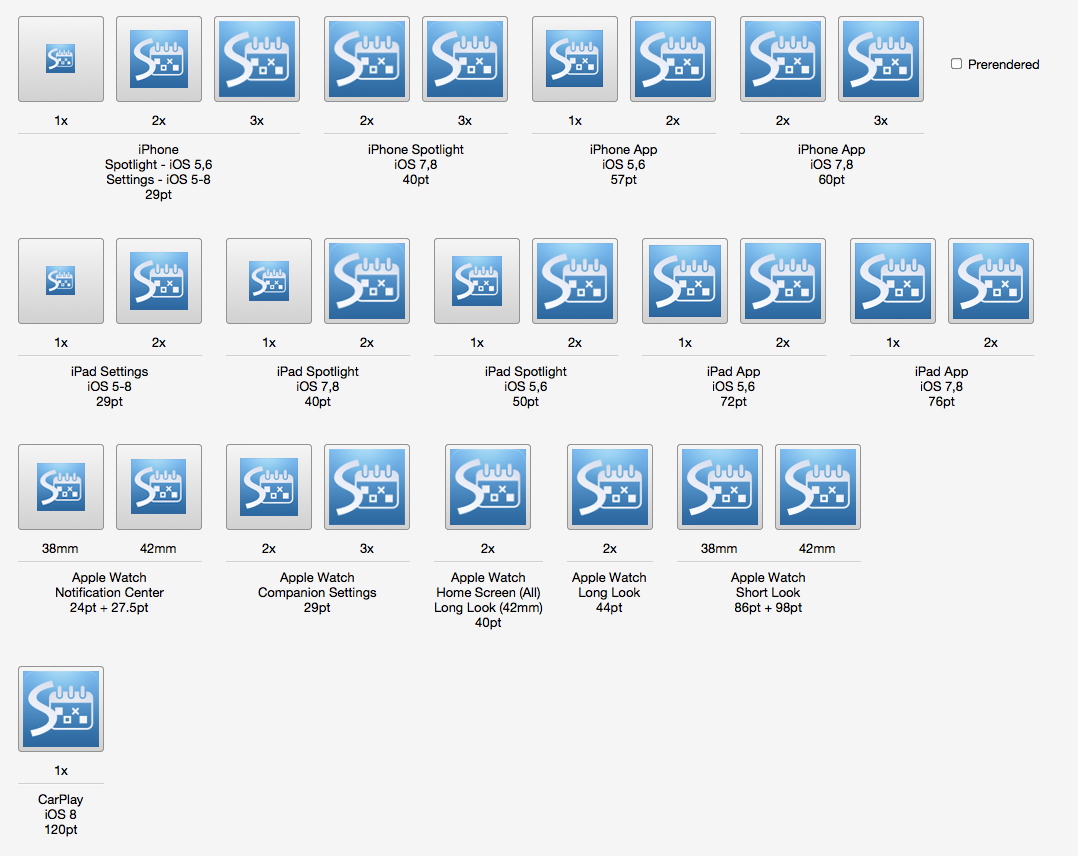
The App Icon Set Has An Unassigned Child Policy
- Open the notification to see the item that your family member wants to get. Can't find your Ask to Buy notifications?
- Approve or decline the purchase.
- If you approve, sign in with your Apple ID and password to make the purchase.
What happens next
After the item is purchased, it's added to your child’s account.2 If you turned on purchase sharing, the item is also shared with the rest of the family group.
If you decline a request, your child receives a notification that you declined the request. If you dismiss the request or don't make the purchase, the child will need to make the request again. Requests that you decline or dismiss are deleted after 24 hours.
Where to find your Ask to Buy requests
If you miss an Ask to Buy notification, you can find the request in Notification Center on your iPhone, iPad, iPod touch, Apple Watch, or Mac.
How to choose another approver
The family organizer can give another parent or guardian in the group over the age of 18 permission to manage Ask to Buy requests. Only one adult needs to manage each purchase, and after it's done, the purchase is final.
On your iPhone, iPad, or iPod touch
- Go to Settings.
- Tap your name.
- Tap Family Sharing, then tap your family member's name.
- Tap Role.
- Tap Parent/Guardian.
On your Mac
- Choose Apple menu > System Preferences, then click Family Sharing.
- Click Family in the sidebar.
- Click Details next to the family member's name, then select Parent/Guardian.
On your Mac with macOS Mojave or earlier
- Choose Apple menu > System Preferences.
- Click iCloud, then select your family member.
- Select Parent/Guardian.
How children or teens can make a request with Ask to Buy
- To buy or download an item, tap the price or Get button. Or if you're using an Apple Watch, double-click the side button, then enter your passcode.
- If asked, enter your Apple ID and password.
- Tap Ask. If your parent or guardian is nearby, you can tap 'approve it in person' and they can approve the purchase directly from your device.
- After your parent or guardian buys the item, it downloads to your device automatically.2
Ask to Buy doesn't apply to apps or content from school
If a child's account was created using Apple ID for Students, the child can use Ask to Buy for personal purchases outside of the educational institution. It won't apply to any apps or other content distributed by the school.
1. Age varies by country or region.
2. In South Korea, a child might be asked to verify their age after an Ask to Buy request is approved. Learn about age verification in South Korea.
App Icon
Every app needs a beautiful and memorable icon that attracts attention in the App Store and stands out on the Home screen. Your icon is the first opportunity to communicate, at a glance, your app’s purpose. It also appears throughout the system, such as in Settings and search results.
Embrace simplicity. Find a single element that captures the essence of your app and express that element in a simple, unique shape. Add details cautiously. If an icon’s content or shape is overly complex, the details can be hard to discern, especially at smaller sizes.
Provide a single focus point. Design an icon with a single, centered point that immediately captures attention and clearly identifies your app.
Design a recognizable icon. People shouldn’t have to analyze the icon to figure out what it represents. For example, the Mail app icon uses an envelope, which is universally associated with mail. Take time to design a beautiful and engaging abstract icon that artistically represents your app’s purpose.
Keep the background simple and avoid transparency. Make sure your icon is opaque, and don’t clutter the background. Give it a simple background so it doesn’t overpower other app icons nearby. You don’t need to fill the entire icon with content.

Use words only when they’re essential or part of a logo. An app’s name appears below its icon on the Home screen. Don’t include nonessential words that repeat the name or tell people what to do with your app, like 'Watch' or 'Play.' If your design includes any text, emphasize words that relate to the actual content your app offers.
Don’t include photos, screenshots, or interface elements. Photographic details can be very hard to see at small sizes. Screenshots are too complex for an app icon and don’t generally help communicate your app’s purpose. Interface elements in an icon are misleading and confusing.
Don’t use replicas of Apple hardware products. Apple products are copyrighted and can’t be reproduced in your icons or images. In general, avoid displaying replicas of devices, because hardware designs tend to change frequently and can make your icon look dated.
Don’t place your app icon throughout the interface. It can be confusing to see an icon used for different purposes throughout an app. Instead, consider incorporating your icon’s color scheme. See Color.

Test your icon against different wallpapers. You can’t predict which wallpaper people will choose for their Home screen, so don’t just test your app against a light or dark color. See how it looks over different photos. Try it on an actual device with a dynamic background that changes perspective as the device moves.
Keep icon corners square. The system applies a mask that rounds icon corners automatically.
App Icon Attributes
All app icons should adhere to the following specifications.
| Attribute | Value |
|---|---|
| Format | PNG |
| Color space | Display P3 (wide-gamut color), sRGB (color), or Gray Gamma 2.2 (grayscale). See Color Management. |
| Layers | Flattened with no transparency |
| Resolution | Varies. See Image Size and Resolution. |
| Shape | Square with no rounded corners |
App Icon Sizes
Every app must supply small icons for use on the Home screen and throughout the system once your app is installed, as well as a larger icon for display in the App Store.
| Device or context | Icon size |
|---|---|
| iPhone | 180px × 180px (60pt × 60pt @3x) |
| 120px × 120px (60pt × 60pt @2x) | |
| iPad Pro | 167px × 167px (83.5pt × 83.5pt @2x) |
| iPad, iPad mini | 152px × 152px (76pt × 76pt @2x) |
| App Store | 1024px × 1024px (1024pt × 1024pt @1x) |
The App Icon Set Has An Unassigned Child Protective
Provide different sized icons for different devices. Make sure that your app icon looks great on all the devices you support.
Mimic your small icon with your App Store icon. Although the App Store icon is used differently than the small one, it’s still your app icon. It should generally match the smaller version in appearance, although it can be subtly richer and more detailed since there are no visual effects applied to it.
Spotlight, Settings, and Notification Icons
Every app should also provide a small icon that iOS can display when the app name matches a term in a Spotlight search. Additionally, apps with settings should provide a small icon to display in the built-in Settings app, and apps that support notifications should provide a small icon to display in notifications. All icons should clearly identify your app—ideally, they should match your app icon. If you don’t provide these icons, iOS might shrink your main app icon for display in these locations.
The App Icon Set Has An Unassigned Child Support
| Device | Spotlight icon size |
|---|---|
| iPhone | 120px × 120px (40pt × 40pt @3x) |
| 80px × 80px (40pt × 40pt @2x) | |
| iPad Pro, iPad, iPad mini | 80px × 80px (40pt × 40pt @2x) |
| Device | Settings icon size |
|---|---|
| iPhone | 87px × 87px (29pt × 29pt @3x) |
| 58px × 58px (29pt × 29pt @2x) | |
| iPad Pro, iPad, iPad mini | 58px × 58px (29pt × 29pt @2x) |
| Device | Notification icon size |
|---|---|
| iPhone | 60px × 60px (20pt × 20pt @3x) |
| 40px × 40px (20pt × 20pt @2x) | |
| iPad Pro, iPad, iPad mini | 40px × 40px (20pt × 20pt @2x) |
Don’t add an overlay or border to your Settings icon. iOS automatically adds a 1-pixel stroke to all icons so that they look good on the white background of Settings.
TIP If your app creates custom documents, you don't need to design document icons because iOS uses your app icon to create document icons automatically.
User-Selectable App Icons
For some apps, customization is a feature that evokes a personal connection and enhances the user experience. If it provides value in your app, you can let people select an alternate app icon from a set of predefined icons that are embedded within your app. For example, a sports app might offer icons for different teams or an app with light and dark modes might offer corresponding light and dark icons. Note that your app icon can only be changed at the user’s request and the system always provides the user with confirmation of such a change.
The App Icon Set Has An Unassigned Child Xamarin
Provide visually consistent alternate icons in all necessary sizes. Like your primary app icon, each alternate app icon is delivered as a collection of related images that vary in size. When the user chooses an alternate icon, the appropriate sizes of that icon replace your primary app icon on the Home screen, in Spotlight, and elsewhere in the system. To ensure that alternate icons appear consistently throughout the system—the user shouldn't see one version of your icon on the Home screen and a completely different version in Settings, for example—provide them in the same sizes you provide for your primary app icon (with the exception of the App Store icon). See App Icon Sizes.
For developer guidance, see the setAlternateIconName method of UIApplication.
The App Icon Set Has An Unassigned Child
NOTE Alternate app icons are subject to app review and must adhere to the App Store Review Guidelines.