- How Update Boot Support Partition For Volume On Mac Os X Lion
- How Update Boot Support Partition For Volume On Mac Os X 10 11 Download Free Iso
- How Update Boot Support Partition For Volume On Mac Os X 10 13 Download
- How Update Boot Support Partition For Volume On Mac Os X 10.10
If you install macOS on an additional volume of your startup disk, you can switch between that macOS and the macOS on your other volume, as if each were on a separate disk. And because storage space is shared across APFS volumes, you don't need to reserve space for the new volume. Its size automatically adjusts to fit your content.
What you need
Your Mac must already be using macOS High Sierra or later on an APFS-formatted startup disk. Find out which format your startup disk is using.
You don't need to reserve storage space for the new volume, but macOS needs as much as 20GB of available space to install, depending on the version of macOS. If you don't have enough space, the installer will let you know.
Change the TARGET and MACOSINSTALLER fields inside the script to match the volume and path you want to install a recovery partition to and where the script can find the Mac OS X High Sierra installer. The High Sierra installer is likely on your main drive so just point to that path. Save the script after. (For Windows Vista, 7, 8) Boot into Windows, open Computer - right click on C: drive - Properties - Tools - Check now - check both fields and press Start. CampTune, General, NTFS for Mac OS X. Step 1 Log in to your Mac, go 'Finder' and click on 'Applications'. On 'Applications', scroll it down till you get the 'Utilities' icon. Then click on 'Disk utility icon'. Step 2 On the top left panel of the new window, click on your hard drive which will be highlighted blue. OS X V10.7 Lion:: Updating Boot Support Partitions For Volume As Required May 4, 2012. IMac with 10.7.3 and Seagate GoHlex 2TB external drive. Using the disk utility why is was not backing up.The Seagate is now asking the question 'Updating boot support partitions for the volume as required'.
About This Mac includes a storage overview: Choose Apple () menu > About This Mac, then click Storage.
Back up your Mac
It's a good idea to back up your Mac first, especially if you're installing a beta version of macOS. Beta software is software that is still in development, so some apps and services might not work as expected.
Add an APFS volume
- Open Disk Utility, which is in the Utilities folder of your Applications folder.
- In the sidebar, select your existing APFS volume.
- Choose Edit > Add APFS Volume from the menu bar, or click in the Disk Utility toolbar. These options are available only when an APFS volume is selected.
- Type any name for the new APFS volume, then click Add:
- Disk Utility should now show the new volume in the sidebar. The new volume will also appear in the Finder, as if it were a separate disk. You can now quit Disk Utility.

Install macOS on the volume
Choose an installation method:
- To install a beta (prerelease) version of macOS, enroll in the Apple Beta Software Program and follow the installation instructions on the program website.
- To install a release version of macOS, you can use macOS Recovery. The keys you press at startup determine which macOS is installed.
When the installer opens and you're asked to choose where to install, click Show All Disks, then select the new volume.

Switch between macOS versions
After installation is complete, you can use Startup Disk preferences or Startup Manager to quickly switch between each macOS:

- Choose Apple () menu > Startup Disk, then click and enter your administrator password. Select the volume that you want to use, then click Restart.
- Or press and hold the Option key during startup. When prompted, choose the volume that you want to start up from.
Keep the macOS on each volume up to date
To find the latest updates for each version of macOS, check for software updates, then start up from the other volume and check for software updates again.
Learn more
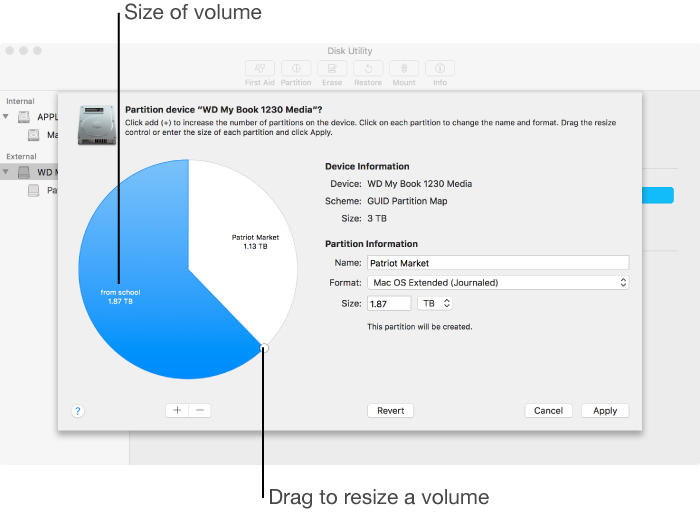
If your Mac is using macOS Sierra or earlier, or the startup disk is formatted as Mac OS Extended instead of APFS, you can create a new partition instead. The space it occupies doesn't automatically adjust to fit your content, so you must manually size the partition. Learn how to add a volume to a device formatted as Mac OS Extended.
Here’s the answer to another reader request…
According to WIkipedia, “On Apple–Intel architecture Macintosh computers, the EFI partition is initially blank and not used for booting. However, the EFI partition is used as a staging area for firmware updates.” When people look to create non-standard boot environments or attempt to build a hackintosh, the first step is often mounting and modifying the EFI boot partition. Before you read any further, take note: altering your EFI boot partition is not supported by Apple and The Mac Admin takes no responsibility if you render your computer(s) unbootable by mounting and modifying this partition.
To mount an EFI boot partition, follow these steps:
1. Discover the volume identifier for your EFI boot partition.
Run this command:
The output should look something like this:
In this case, the volume identifier of the EFI partition is disk0s1
2. Create a mount point.
How Update Boot Support Partition For Volume On Mac Os X Lion
A mount point is a directory where a non-booted volume is mounted. On Mac OS X, mount points are typically created in /Volumes. We can create a directory called efi within /Volumes by running the following command:
How Update Boot Support Partition For Volume On Mac Os X 10 11 Download Free Iso
3. Mount the EFI partition at the efi mount point.
How Update Boot Support Partition For Volume On Mac Os X 10 13 Download
Run the command:
How Update Boot Support Partition For Volume On Mac Os X 10.10
That’s it. Your EFI volume will be mounted. Modify it at your own risk.